

By Staff Correspondent
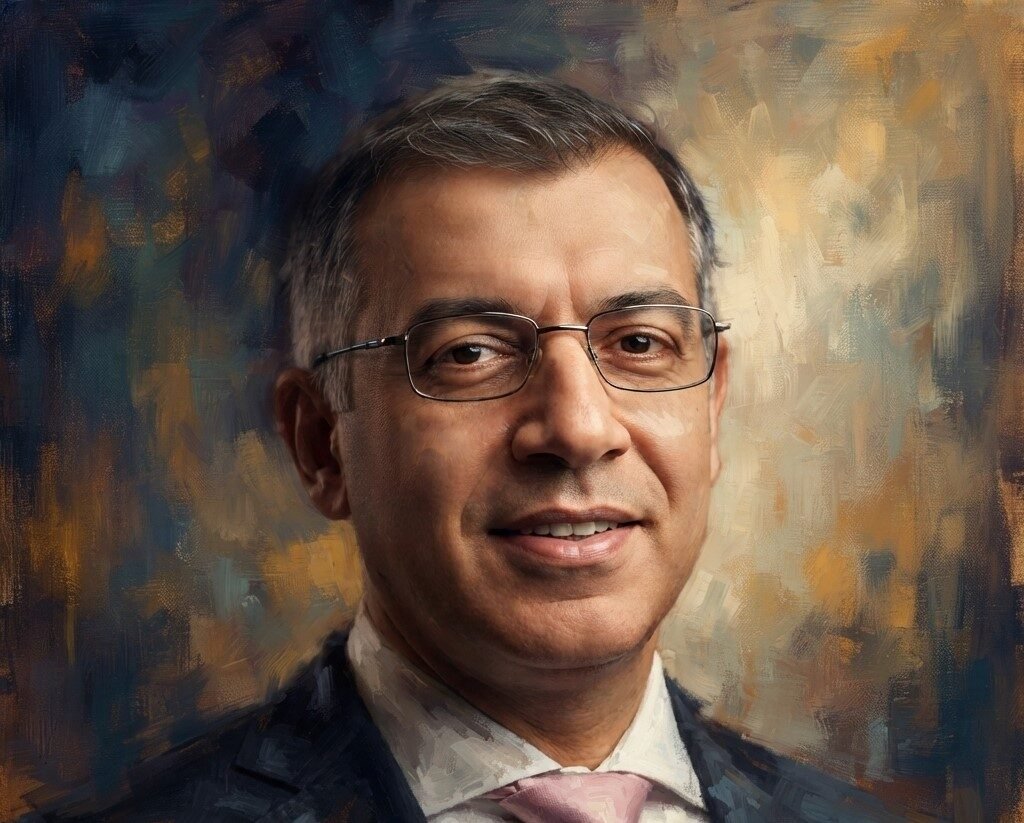
As Bangladesh’s banking industry enters a new phase of transformation, Dhaka Bank PLC is positioning itself for growth through stronger governance, disciplined lending and digital innovation rather than aggressive expansion. According to Managing Director and CEO Osman Ershad Faiz, the bank’s long-term ambition is not merely to become larger, but to become one of the country’s strongest and most trusted private commercial banks.
In an extensive conversation outlining Dhaka Bank’s strategic priorities, Osman Ershad Faiz spoke about profitability, customer confidence, artificial intelligence, SME financing, sustainable banking and the future of Bangladesh’s economy. His message was consistent throughout: sustainable banking begins with trust.
On the bank’s ambition: “We want to become stronger, not just bigger”
Osman Ershad Faiz believes the next five years will be decisive for both the banking sector and Dhaka Bank. While many institutions continue to pursue balance-sheet growth, he argues that resilience, customer experience and governance will define future leaders.
“We want to become one of Bangladesh’s leading private commercial banks—not simply by becoming larger, but by becoming stronger in performance, customer experience, resilience and long-term sustainability.”
He says the bank is building a more diversified institution by expanding beyond its traditional corporate banking strength into retail, SME, agriculture and sustainable finance.
According to him, diversification is not a strategy for rapid expansion; it is a strategy for stability.
“Sustainable growth requires discipline. We will continue to place strong emphasis on asset quality, capital strength and responsible lending.”

On financial performance: Customer trust matters more than the numbers
Reflecting on Dhaka Bank’s 2025 performance, Osman Ershad Faiz says the financial results are encouraging, but the underlying customer confidence is even more significant.
The bank recorded BDT 6,014 million in Profit Before Tax during 2025, representing 74 percent year-on-year growth. Deposits also increased by 13.1 percent despite broader concerns over confidence in Bangladesh’s banking sector.
For Faiz, the deposit growth carries a deeper meaning.
“The growth in deposits is particularly meaningful because it came at a time when confidence in the broader banking sector was under pressure. It reflects something more important than a financial number—the trust our customers continue to place in Dhaka Bank.”
He describes trust as the institution’s most valuable capital and says preserving that confidence remains the bank’s highest priority.
On credit discipline: Looking beyond collateral
One of the strongest messages from the CEO concerns responsible lending. While many borrowers focus on collateral, Osman Ershad Faiz says Dhaka Bank’s credit philosophy is increasingly centered on the quality of the underlying business.
The bank maintained a Non-Performing Loan ratio of 3.77 percent in 2025, a figure he attributes to disciplined credit assessment.
“When we lend, we look beyond collateral to understand the strength of the underlying business, the quality of management, financial fundamentals and the ability to generate sustainable cash flows.”
He argues that sound lending decisions depend more on business viability than asset security, adding that maintaining credit quality will remain fundamental as the bank expands into new sectors.
On digital banking: Technology should make banking simpler
Faiz rejects the idea that digital transformation is measured by the number of mobile apps or online platforms a bank launches. Instead, he says customers judge digital banking by convenience.
“Digital transformation is not about launching more applications or platforms. It is about making banking genuinely simpler, faster and more convenient.”
His objective is to reduce paperwork, minimize branch visits and significantly shorten processing times across everyday banking services—from opening accounts to loan applications.
Dhaka Bank’s digital platform Dhaka Bank Go Plus surpassed 171,000 registered customers by the end of 2025, reflecting growing customer adoption of digital channels.
Artificial intelligence and machine learning, he says, will increasingly support operational efficiency in areas including credit assessment, fraud detection and personalized financial solutions.
“Whether a customer is opening an account, applying for a loan or carrying out an everyday transaction, we want the journey to involve fewer forms, fewer branch visits and significantly shorter processing times.”
 On SMEs: Bringing entrepreneurs into formal finance
Small and medium enterprises remain one of Dhaka Bank’s biggest strategic priorities. Faiz notes that Bangladesh’s CMSME sector contributes roughly 30 percent of the national economy, yet many entrepreneurs still lack access to formal banking.
To address this gap, the bank has introduced its e-Rin platform, designed to digitize SME loan applications and assessments.
“Through our e-Rin platform, we are digitizing loan applications and assessments to make suitable SME financing faster and more accessible.”
He also believes digital payments can reshape credit evaluation. Instead of relying solely on conventional collateral, transaction histories generated through Bangla QR and Dhaka Pay can provide valuable insights into business performance.
“Digital payment platforms can help merchants establish transaction histories, allowing banks to better understand how businesses operate and potentially assess creditworthiness beyond conventional collateral requirements.”
His long-term vision is ambitious.
“Our ambition is to help digitalise traditional markets across Bangladesh—one market at a time.”
On sectors shaping Bangladesh’s future
Asked where Dhaka Bank sees the strongest investment opportunities, Osman Ershad Faiz identifies several industries that he believes will define Bangladesh’s next stage of economic development.
These include pharmaceuticals, information technology, agrotech, advanced manufacturing and renewable energy.
He also says the ready-made garment industry will remain the backbone of the economy, but its future competitiveness depends on moving further up the value chain.
“The next phase of growth in garments should increasingly come from backward linkages, technical textiles and greater automation, allowing Bangladesh to capture more value across the industrial chain.”
According to him, financing productive industries is ultimately about creating employment, strengthening exports and improving national competitiveness.
On sustainable finance: “Climate risk is credit risk”
Environmental sustainability is no longer a separate banking agenda, Osman Ershad Faiz argues—it is a core financial issue.
“Climate change and environmental risks have direct financial consequences, which is why we view climate risk as credit risk.”
Dhaka Bank’s green financing portfolio reached BDT 6,570 million in 2025, including BDT 5,800 million in green finance disbursements.
The bank intends to expand financing for clean energy, sustainable infrastructure, resource-efficient industries and climate-resilient agriculture.
Rather than treating green finance as a niche product, Faiz says it has become an essential part of prudent risk management.
On financial inclusion: Banking must create opportunities
For Faiz, the success of a financial institution cannot be measured by profitability alone. He believes banks have a broader responsibility to expand economic participation.
“A bank’s success cannot be measured only by financial performance. It must also be measured by the opportunities it creates.”
That includes financing businesses that generate employment, supporting entrepreneurs, reaching underserved communities and helping households and farmers participate more fully in the formal economy.
Dhaka Bank currently operates through 283 points of presence across Bangladesh, combining physical access with digital banking services.
Women entrepreneurs, young people, rural communities and agricultural businesses remain central to the bank’s inclusion strategy, he says.
On cybersecurity and responsible AI
As banking becomes increasingly digital, Faiz acknowledges that trust must also be protected technologically.
He says Dhaka Bank is strengthening cyber resilience through continuous monitoring, threat detection, security assessments and AI-supported fraud monitoring, alongside investments in employee training.
“As banking becomes increasingly digital, cybersecurity, data protection and responsible use of technology become fundamental.”
He emphasises that artificial intelligence should enhance banking responsibly rather than replace human judgment.
On Bangladesh’s economic outlook: Reasons for optimism
Despite ongoing economic challenges, Faiz remains optimistic about Bangladesh’s long-term prospects. He points to the country’s young population, expanding middle class, entrepreneurial culture and increasing digital adoption as powerful structural advantages.
“Our young population, growing middle class, entrepreneurial spirit, increasing digital adoption and movement towards higher-value production create significant opportunities for the financial sector.”
He believes banks must now align themselves with that transformation by combining technological efficiency with disciplined governance and strong customer relationships.
The road ahead
Summarising Dhaka Bank’s priorities, Faiz identifies five areas that will shape the institution’s future: sustaining credit discipline, accelerating digital integration, scaling sustainable finance, deepening financial inclusion and strengthening governance.
His concluding message reflects the philosophy underpinning the bank’s strategy.
“If we can combine the efficiency of technology with the judgement, experience and relationships that define good banking, we can build an institution that grows alongside Bangladesh—and creates lasting value for our customers, shareholders and the economy.”
For Dhaka Bank, the next chapter is not being defined by size alone. It is being built on trust, discipline and the belief that smarter banking can contribute directly to Bangladesh’s long-term economic future.


